 NomadVibes

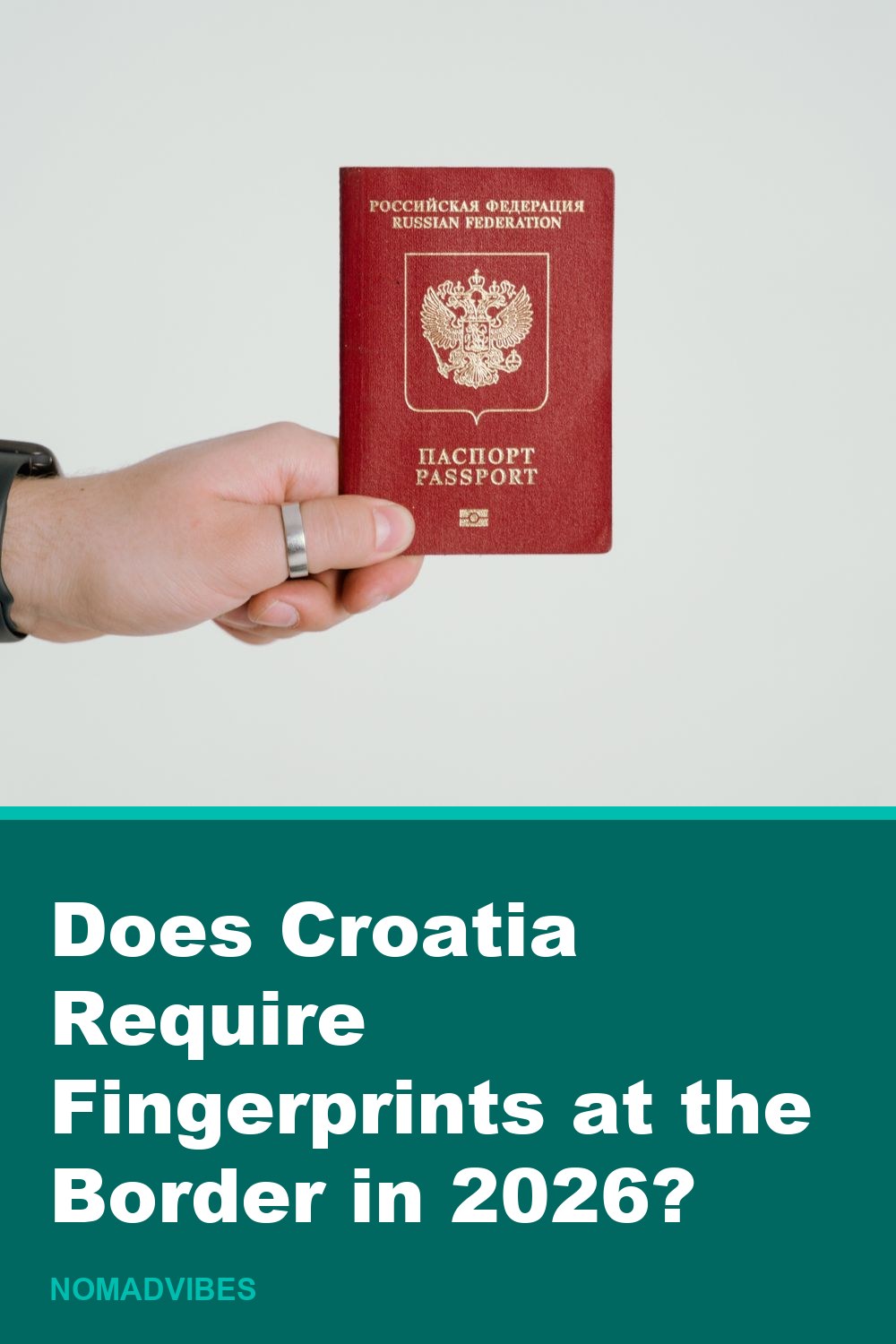

- Entering Croatia under Schengen rules, most short-stay non-EU visitors should expect EES biometric registration: a fingerprint and photo check at the border.
- Montenegro sits outside the EU and Schengen, so it has no EES check, and its 90/180 days are counted apart from your Schengen days.
- Keep your own dated log of every Schengen entry and exit, and confirm stamp and EES rules on official government sites before you fly.
Yes: if you enter Croatia as a non-EU short-stay visitor on Schengen rules, expect to be registered biometrically at the border under the EU's Entry/Exit System (EES). That means a fingerprint and photo check. Travel Off Path describes EES as the EU's mandatory fingerprinting system and says the Schengen Area expects biometric registration for most short-term non-EU visitors who arrive from outside it. The question is back in the news because of a new Travel Off Path piece on Montenegro, a neighbour where EES does not apply. For nomads who hop between Dubrovnik, Kotor and beyond, the difference affects both the queue and the day count.
Who is likely to be fingerprinted in Croatia
The rule that matters is Schengen, not the EU. Travel Off Path stresses that EES is tied to the Schengen Area rather than to EU membership. Croatia, treated here on Schengen rules, falls on the biometric side of that line. If you are a non-EU remote worker arriving for a few weeks or months, you are in the group the outlet describes: a short-term visitor entering from outside the area.
I can't tell you from this reporting whether a particular nationality, age group or residence permit is exempt. If you hold anything other than an ordinary short-stay entitlement, confirm with the official government pages for Croatia and the EU before you travel.
Which stamps and dates still count for the 90/180 limit
This is the part nomads ask about most, and the honest answer is that it needs an official source. Travel Off Path covers where the fingerprinting applies, not how EES records interact with older passport stamps. I won't guess at it, and you shouldn't rely on a forum post for it.
What I can say from long-stay experience is how to protect yourself while you check:
- Keep your own list of every entry and exit date, border by border.
- Photograph each stamp, boarding pass and ferry or bus ticket as proof.
- Count the 180-day window from the day you plan to enter, not from the day you booked.
- If your own count and an official record ever disagree, ask the border officer or the relevant ministry before you leave, not after.
Our post on tracking your Schengen days before every crossing walks through that habit in more detail.
Montenegro: the neighbour with no EES, for now
Travel Off Path's article is about Montenegro, which it calls one of Europe's last fingerprint-free coastlines. The reasons are specific:
- Montenegro is outside both the EU and Schengen, so EES does not apply at its borders.
- For U.S. tourists, entry is visa-free for up to 90 days in a 180-day period, counted completely separately from the Schengen allowance.
- The passport must have been issued within the last 10 years and be valid for at least 3 months past departure.
- No ETIAS or EES registration is required for now.
Those rules are written for Americans. If you hold another passport, read our note on the Montenegro visa change for nomads from five countries before assuming the same terms.
The separate count is useful in practice. Time in Montenegro does not eat into your Schengen days, and Croatian days do not eat into Montenegro's. But crossing into Croatia from Montenegro is an arrival from outside Schengen, so the biometric registration discussed above is the check to expect when you come back across.
How the rules could change
Montenegro is the frontrunner among EU candidates. Travel Off Path reports that it had provisionally closed 25 of 33 negotiating chapters as of November 19, 2026. According to the European Commission's roadmap as the outlet describes it, an Accession Treaty could be signed as early as June 2027, with membership in 2028.
The catch for travellers is that joining the EU would not automatically bring EES. Cyprus has been an EU member since 2004 and still does not take part in EES because it is not in Schengen. If Montenegro joins Schengen, it would be expected to adopt common border procedures, including biometric registration, and your 90 days there would merge into the shared European limit. A long Adriatic loop planned for 2028 or later could therefore run on different rules from one planned today.
Croatia, Montenegro and Cyprus compared
| Place | Border system | 90/180 day count |
|---|---|---|
| Croatia (on Schengen rules) | EES biometric registration expected for most short-term non-EU visitors arriving from outside | Shared Schengen allowance |
| Montenegro | Outside EU and Schengen; no EES or ETIAS for now | 90 days in 180, counted separately from Schengen |
| Cyprus | EU member since 2004 but not in Schengen; does not take part in EES | Confirm on official pages |
A transit shortcut that does not help you enter Croatia
Travel Off Path notes that if you connect through an EU hub on the way to Montenegro and stay airside in the international transit area, you avoid Schengen biometric checks. That only works while you never formally enter. If your destination is Croatia, you will pass the border, so the shortcut does not apply to you. It is only relevant if Montenegro is your actual endpoint.
Practical steps before you fly
- Confirm your status. Check on official Croatian and EU government sites whether you are a short-stay visitor subject to EES registration, and whether any exemption applies to you.
- Check your passport. For Montenegro, the stated rules are issued within 10 years and valid 3 months past departure. For Schengen, look up the current validity rules on the official pages instead of relying on memory.
- Write out your calendar. List every planned entry and exit, marking which days count toward Schengen and which toward Montenegro.
- Build in time. A first-time biometric check adds a step at the border. Our post on EES delays and what long-stay travellers should plan for covers how to leave slack in connections and onward bookings.
- Carry paper backups. Bring proof of onward travel and accommodation and your dated log, in a folder you can reach without unpacking your bag.
- Re-check a few days before departure. Border systems and accession timelines are moving. The Montenegro dates above are targets, not guarantees.
Who should plan around this and who can relax
If you are a non-EU remote worker staying in Croatia for a month or two, the fingerprint and photo step is a one-off inconvenience, not a barrier. The real risk is the day count, especially if you split time between Schengen countries and the Balkans. If you are planning a longer loop, splitting it between Croatia and Montenegro can stretch your total time in the region, because Montenegro's days are counted separately for now. That is only a bonus if you keep clean records and your passport meets Montenegro's validity rules.
Whichever route you choose, treat blog posts, including this one, as a starting point and the official government pages as the final word.
As an Amazon Associate I earn from qualifying purchases: if you buy through these links I may earn a small commission, at no extra cost to you. Each link opens a search on the Amazon store for your country.
Watch or listen to this episode
Sources
Photo: Tima Miroshnichenko / Pexels

I'm an Italian creator who builds apps, games and websites. I run NomadVibes with the help of AI tools: every article starts from the sources linked above, and I check what goes out. I'm not a doctor, a lawyer or a financial adviser. Spotted a mistake or have an idea? Write to me.
Instagram @spartaco_94_My websiteWrite to meAbout this blogWritten by Ciro Irmici (Ciro Simone Irmici), with the help of AI tools. Ciro Irmici's website









 Pronunciation Perfection: How to Sound Like a Native Speaker
 Reinventing Yourself After 40: A Guide to Embracing Change and New Beginnings
 Personal Branding for Introverts: How to Shine Without Shouting





