 NomadVibes

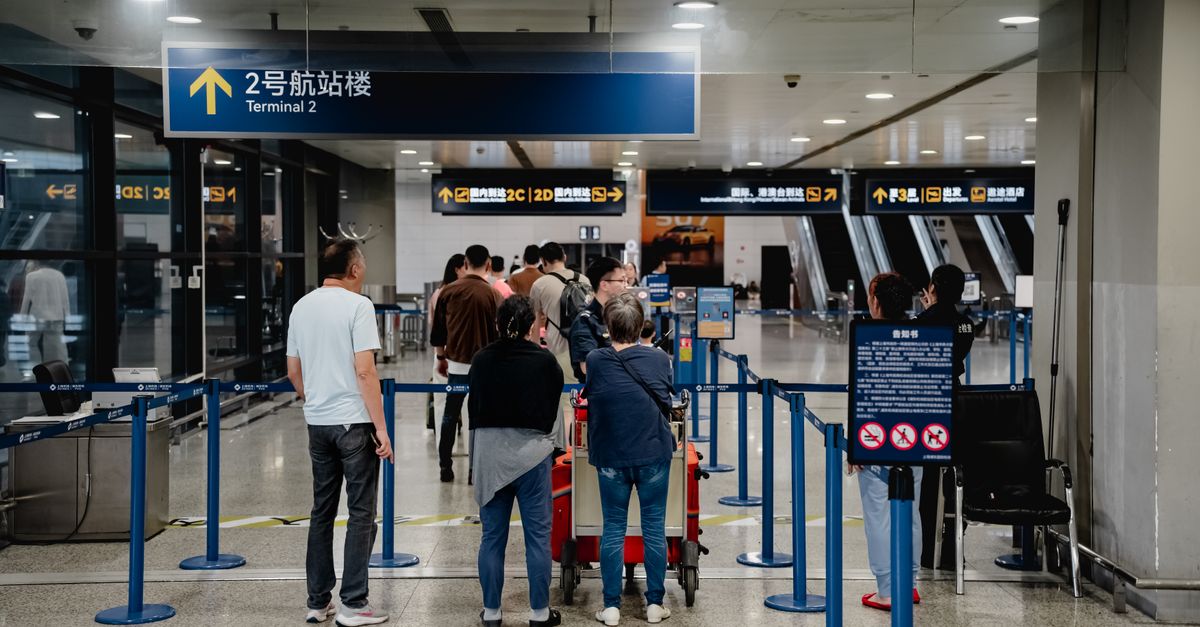
If you are a non-EU remote worker heading to Portugal, Spain, Italy or anywhere else in Schengen, your arrival now includes a fingerprint scan and a facial scan, and the queue for it can be long. According to Travel Off Path, aviation groups ACI Europe and Airlines for Europe have reported waits of up to 5 hours, and say queues routinely pass 2 hours at some checkpoints. For anyone who works on a laptop and books tight connections, that changes how you plan a border crossing.
What is actually happening at the border
The EU's Entry/Exit System (EES) asks non-EU visitors on short stays in the Schengen Area to give fingerprints and have their face scanned. Travel Off Path notes that it applies across the participating countries, with Portugal, Spain, France, Italy and Croatia among the examples.
The system became fully operational in April 2026. Six months on, the same report says glitchy registration kiosks and a shortage of staff are still causing slow processing. ACI Europe and Airlines for Europe have called for urgent improvements, and Travel Off Path's reading is that things are not likely to get better soon.
None of this means you cannot enter. It means the first crossing, at least, is slower and less predictable than it used to be, and you should plan around that.
Why this hits long-stay travellers harder
A holiday-maker with a fixed return flight can absorb a bad queue. A digital nomad usually has more moving parts: a coworking desk or a call booked for the afternoon you land, a check-in window at a rental, or an onward train to another city.
Long-stay travellers also tend to cross borders more often. Every Schengen entry is another chance to hit a long queue, so a slow-moving border costs you most if your route zigzags through several countries.
Your allowance matters too. Short-stay rules in Schengen work on a 90-days-in-180 basis, so it is wise to keep your own record of the days you have used rather than relying on anyone else to count them for you. Border delays also tend to make a bad day-count more stressful, because you are more likely to be rushed and less likely to have time to sort out a problem.
What this means for you
You cannot speed up the kiosks, but you can make a long queue cost you less.
- Leave slack on arrival day. Given reported waits of 2 hours or more, and up to 5 at the worst, do not schedule meetings, tight transfers or check-in deadlines for the hours right after landing.
- Avoid tight onward connections. If your first Schengen airport is also where you clear the border, a separate ticket for the next leg is a risk. Give yourself generous gaps or book flexible fares.
- Tell your host. Let your landlord or hotel know your arrival could be delayed by several hours so nobody cancels your booking or leaves you without keys.
- Protect your work schedule. Move calls and deadlines away from arrival day, and keep a charged phone and laptop with the files you need offline.
- Keep your own day-count. Write down your entry and exit dates in a spreadsheet or calendar and check your remaining days before booking each trip.
- Have your paperwork ready. Even where EES does not apply, officers may ask where you are staying or for proof of onward travel, so keep accommodation details and return or onward tickets handy.
- Think about your route. If your plans are flexible, consider whether some of your time could be spent outside Schengen, as covered below.
The alternatives: Ireland and the UK
Travel Off Path lists four non-Schengen European countries that do not run EES procedures for arriving Americans. The two with details available here are Ireland and the United Kingdom. The article is written for Americans, so check the rules for your own passport before relying on any of this.
Ireland is in the EU but opted out of Schengen, so it does not need to use EES. Americans can fly in on a valid passport alone, with no advance visa or electronic travel authorisation, for visits of up to 90 days. Normal immigration checks still apply, and officers may ask about accommodation or return flights, but there is no fingerprint-and-face-scan routine.
The UK is outside the EU and is not required to apply the EU's fingerprinting rules, so Americans are not expected to register under EES there. There is a catch: since January 8, 2025, Americans need a UK Electronic Travel Authorisation (ETA) before travelling, or they cannot board a flight, train or vessel heading to Britain.
Travel Off Path puts the ETA fee at about $27 as of October 2026. Applications usually take less than a day but can take up to 3 working days, so do not leave it to the last minute. An approved ETA is valid for multiple visits over 2 years, or until your passport expires, whichever comes first, and Americans can generally stay up to 6 months per visit.
Comparing your options
| Destination | EES fingerprints and face scan | Before you travel | Typical stay for Americans |
|---|---|---|---|
| Schengen countries (e.g. Portugal, Spain, France, Italy, Croatia) | Yes, for non-EU short-stay visitors; waits of 2 hours or more reported, up to 5 at worst | Plan for slow arrival; track your allowance | Short stays only |
| Ireland | No | Valid passport only; no advance visa or electronic authorisation | Up to 90 days |
| United Kingdom | No | UK ETA, about $27; usually under a day, up to 3 working days | Generally up to 6 months per visit |
How to use this in your planning
If your base for the next few months is in Schengen, treat the border as a cost to budget for in time, not a surprise. Arrive early in the week, land with your essentials sorted, and keep your first day free.
If you are building a longer route, Ireland and the UK can serve as bases that avoid the EES queue. The UK's longer stay per visit and multi-visit ETA suit people who want to stay put and work. Ireland suits shorter, paperwork-light stops. Check how any time spent in either country interacts with your Schengen allowance and your own passport's rules before you commit.
FAQ
Does the EES apply in Portugal and Spain?
Yes. According to Travel Off Path, the system applies across the countries taking part in Schengen, and Portugal, Spain, France, Italy and Croatia are all named as examples. Non-EU short-stay visitors are asked to give fingerprints and a facial scan.
How long are the border queues in Europe?
ACI Europe and Airlines for Europe have reported waits of up to 5 hours and say queues routinely pass 2 hours at some checkpoints. Not every crossing will be that slow, but it is sensible to plan as if yours could be.
Which European countries skip the EES for Americans?
Travel Off Path lists four non-Schengen countries that do not use EES entry procedures. Ireland and the United Kingdom are two of them. Ireland needs only a valid passport for stays up to 90 days. The UK requires an ETA, which costs about $27 as of October 2026.
- A power bank to keep your phone and laptop running through long airport queues
- A travel document organiser for passports, bookings and proof of onward travel
As an Amazon Associate I earn from qualifying purchases. Links open a search on the Amazon store for your country.
Sources
Photo: dongfang xiaowu / Pexels

I'm an Italian creator who builds apps, games and websites. I run NomadVibes with the help of AI tools: every article starts from the sources linked above, and I check what goes out. I'm not a doctor, a lawyer or a financial adviser. Spotted a mistake or have an idea? Write to me.
Instagram @spartaco_94_My websiteWrite to meAbout this blog









 Pronunciation Perfection: How to Sound Like a Native Speaker
 Reinventing Yourself After 40: A Guide to Embracing Change and New Beginnings
 Personal Branding for Introverts: How to Shine Without Shouting





