 NomadVibes

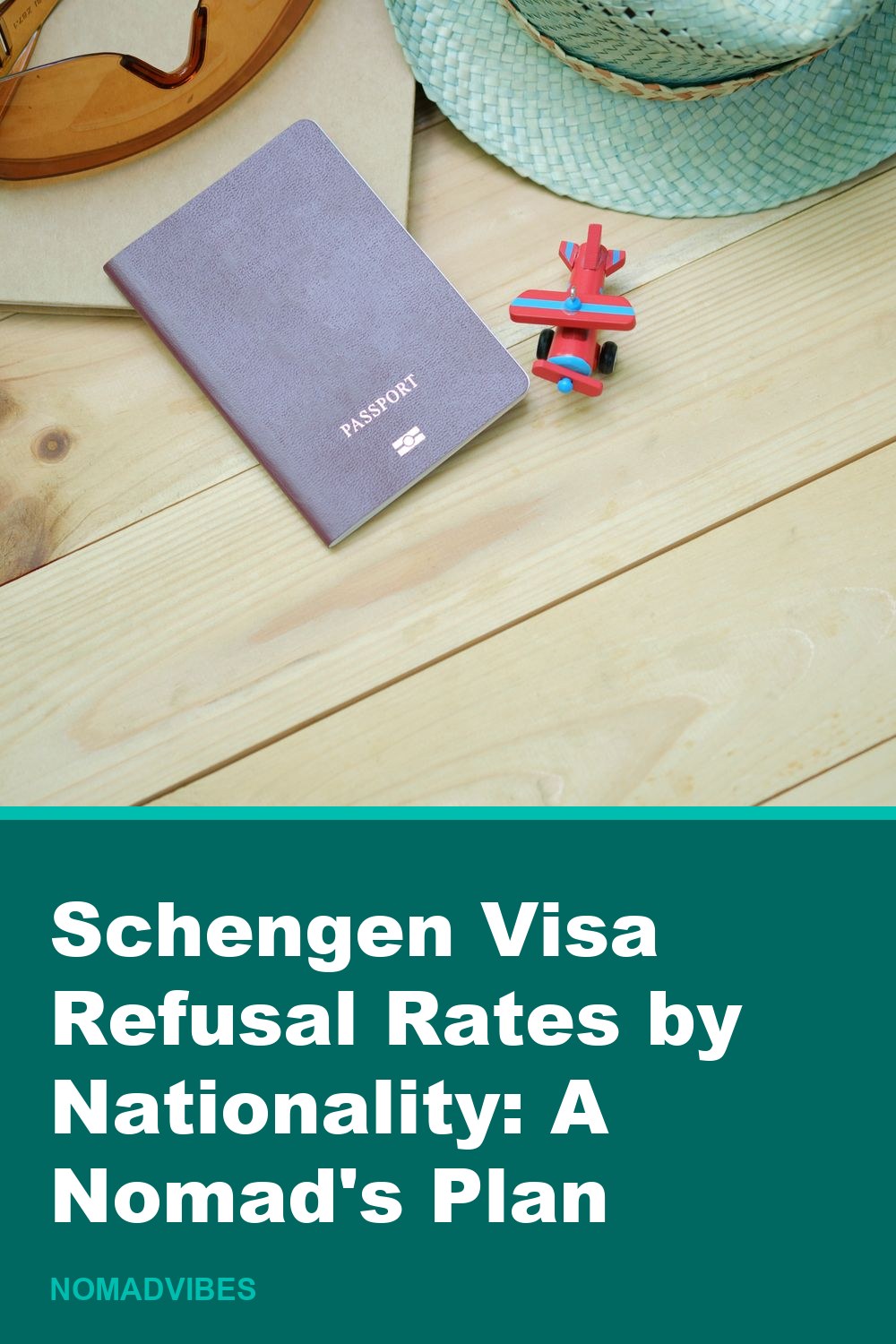

Schengen refusal rates differ a lot depending on where an applicant lodges the file. In 2025 the worldwide average was 14.65%, according to European Commission figures analysed by SchengenVisaInfo. Consulates in Türkiye refused 14.59% of applications, and consulates in Russia refused just 6.38%. For a remote worker, the useful lesson is that your odds depend on your own file, your destination country and where you apply, not only on the passport you hold. Below are the numbers, how to read them, and a three-phase plan: three months before, one month before, and arrival week.
What the 2025 Schengen refusal figures show
SchengenVisaInfo's analysis compares two big application markets. Türkiye was the second most popular country for Schengen applications in 2025, with 1,268,376 lodged. Of those, 1,072,328 were granted and 183,196 refused. Russia had 679,425 applications, 630,605 visas issued and 42,953 refusals.
The rate is refusals divided by visas issued plus refusals. That gives Türkiye 14.59%, almost exactly the worldwide average, and Russia 6.38%, less than half the average. Türkiye sent 1.9 times as many applications as Russia but received 4.3 times as many refusals.
The destination country matters too. According to SchengenVisaInfo, the Netherlands refused applicants in Türkiye ten times as often as in Russia, and Germany five times as often. Germany alone refused 46,008 applications in Türkiye, more than all Schengen countries combined refused in Russia (42,953).
The gap has also moved over time. Türkiye's rate was more than five times Russia's in 2021. It was about 1.5 times in 2023 and 2.3 times in 2025. Russia's rate fell to 7.51% in 2024 and 6.38% in 2025, while Türkiye's barely changed.
How to read these numbers without fooling yourself
Three limits apply before you draw conclusions about your own case.
- The figures are by consulate location, not citizenship. SchengenVisaInfo states that the data is grouped by the country where the consulate sits. A Turkish citizen living in Portugal is counted in Portugal. Nomads often apply from wherever they are based, so check the statistics for your lodging country as well as your passport.
- The coverage is narrow. The material here compares Türkiye, Russia and the worldwide average. It does not give a ranking of every nationality. For your own case, look up the yearly statistics pages on SchengenVisaInfo for your country, or the Commission's short-stay visa data.
- An average is not your personal odds. A 14.59% rate covers tourists, students, family visits and business trips alike. A well-documented file can sit far from that average, and a thin one can sit above it. That is my reading, not an official statistic.
The money side is real, though. SchengenVisaInfo estimates that refused applicants in Türkiye lost about €16.5 million in non-refundable fees in 2025, against about €3.9 million in Russia. That works out to roughly €90 per refused application. A refusal costs you the fee as well as time. For more on fee budgeting, see our post on how to budget if the Schengen visa fee rises above €90.
Phase 1: Three months before departure
This phase is for research and paperwork, not for lodging anything yet.
- Pick your main destination. Because refusal rates vary by deciding country, the choice is not neutral. Look up that country's numbers at the consulate where you will apply. Check on the consulate's own page which country you must apply to if you plan to visit several.
- Read the consulate's checklist line by line. Requirements differ between consulates, so treat any generic list, including mine, as a starting point.
- Build your income evidence. As a remote worker, you will usually want proof of where the money comes from. That could be client contracts, an employer letter, recent invoices and bank statements. Make the story consistent: the same employer or client names, the same income, the same address everywhere.
- Sort out insurance and accommodation. Choose travel insurance that matches the consulate's requirements. For lodging, a booking you can cancel is safer than a prepaid one, since a refusal means the money is gone.
- Write a simple itinerary. Dates, cities and reasons for the stay should match your accommodation and your leave or work arrangements.
- Find the appointment system. Check how far ahead slots open and how busy they are. Do not guess; the consulate page decides.
- Budget the fee and a spare. Assume you may need to pay twice.
Phase 2: One month before departure
If you have not lodged by now, you are cutting it fine. Processing times differ by consulate, so confirm yours.
- Do a last consistency check. Compare every document side by side: names spelled the same as on the passport, dates that do not clash, a bank statement that fits the income you claim.
- Make a full copy. Scan every page and keep a paper set. A document organizer keeps the originals in the order the consulate asked for.
- Lodge the application. Attend the appointment with originals and copies. Keep the receipt and any tracking reference.
- Hold off on non-refundable bookings. If you have not received the decision, flights and rentals should stay cancellable.
- Read the decision properly. If it is a refusal, the notice should state the reason and how to appeal. Read it before doing anything else, and do not simply reapply with the same file.
Phase 3: Arrival week
- Check the visa sticker before you fly. Look at the validity dates, number of entries and number of days allowed. Errors are far easier to fix before departure.
- Carry the same file you submitted. Insurance, accommodation, return or onward plan and proof of income should be reachable at the border, on paper or offline.
- Start your day count on the first day. Our post on tracking your days before every Schengen crossing shows a simple method.
- Know what the visa allows. A short-stay Schengen visa is for visits. Whether you may work remotely on it depends on the country, so ask the consulate in writing rather than relying on forum posts.
Backup options if the odds look poor
If your consulate and destination combination has a high refusal rate, build a second route before you pay any fee.
- Change the destination, honestly. If your main reason for travel is genuinely in another Schengen country, the rate there may differ. Do not invent a base to improve odds.
- Look outside Schengen. Several countries sell long-stay permits built for remote workers. Our rundown of eight easy digital nomad visas is a place to start.
- Shorten the plan. A shorter trip with a clean file can be a better first step than a long one.
- Refundable everything. Keep every booking cancellable until the visa is in your passport.
FAQ
Is the visa fee refunded if my application is refused?
No. SchengenVisaInfo describes the fees as non-refundable and estimates the amount lost by refused applicants in 2025 on that basis.
Does a country's average refusal rate decide my result?
No. It describes thousands of different applications. The figures show that location and destination country matter, but your documents, income evidence and consistency are the parts you control.
As an Amazon Associate I earn from qualifying purchases: if you buy through these links I may earn a small commission, at no extra cost to you. Each link opens a search on the Amazon store for your country.
Watch or listen to this episode
Sources
Photo: Porapak Apichodilok / Pexels

I'm an Italian creator who builds apps, games and websites. I run NomadVibes with the help of AI tools: every article starts from the sources linked above, and I check what goes out. I'm not a doctor, a lawyer or a financial adviser. Spotted a mistake or have an idea? Write to me.
Instagram @spartaco_94_My websiteWrite to meAbout this blog









 Pronunciation Perfection: How to Sound Like a Native Speaker
 Reinventing Yourself After 40: A Guide to Embracing Change and New Beginnings
 Personal Branding for Introverts: How to Shine Without Shouting





