 NomadVibes

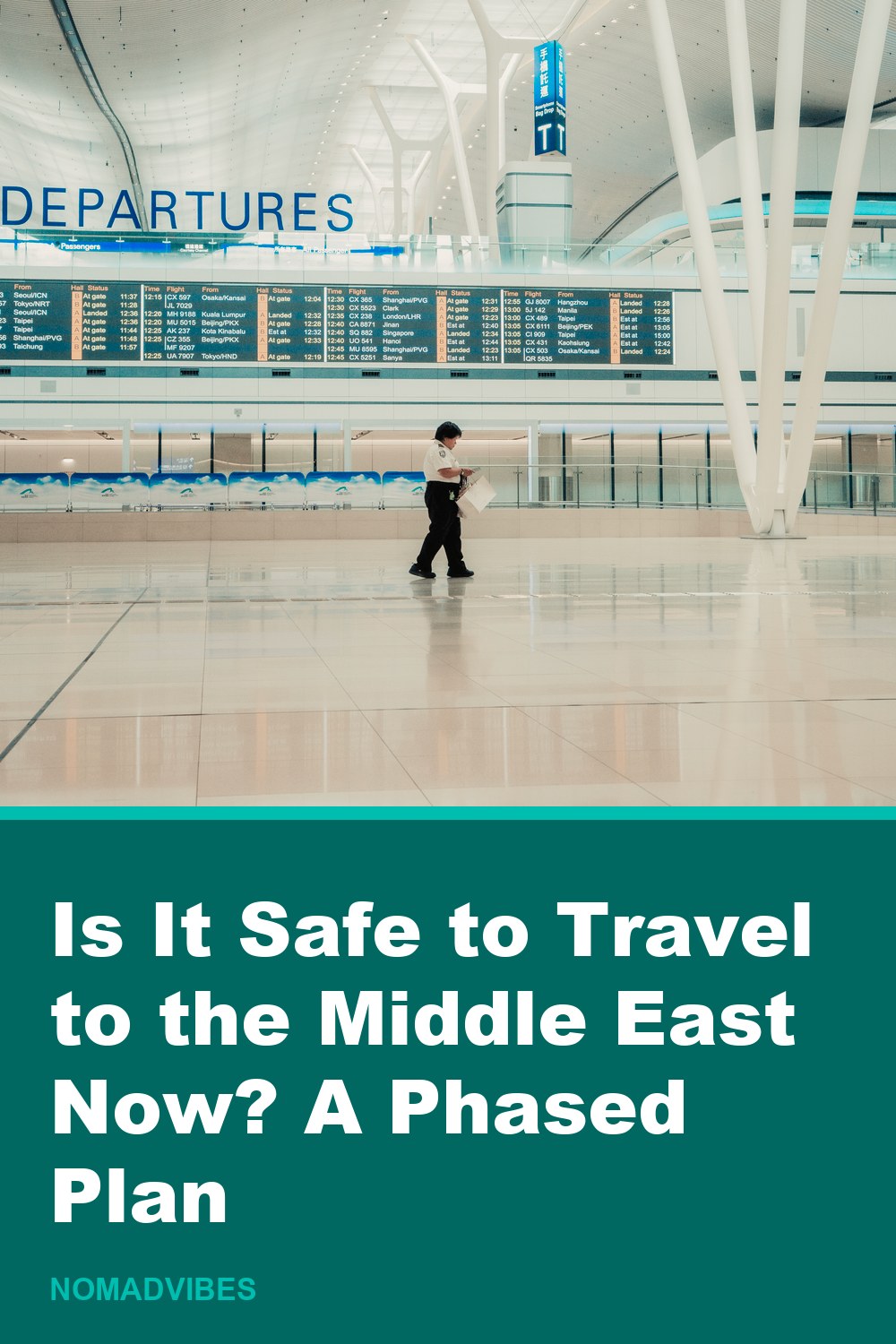

- The FCDO advises against all but essential travel to Saudi Arabia, and your travel insurance could be invalidated if you go against that advice.
- After the 10 October missile strike on Riyadh's airport, Cirium data shows 86% of scheduled departures were cancelled between 8 October and late October.
- Before you book or extend a Gulf stay, check three things in order: the FCDO page, your insurer's exclusions and airline suspensions.
For a long stay, the honest answer is: it depends on the country, and for Saudi Arabia the UK government says only essential travel. The FCDO advises against all but essential travel to most of the country, and against all travel within 10km of the Yemen border. Elsewhere in the region, the risk of sudden escalation is described as high. A flight cancellation or an advisory change can break a long-stay plan, and it can also void your insurance. So the safety question is really a planning question: what happens to your income, your lease and your route home if the situation shifts?
What the FCDO says about Saudi Arabia right now
The FCDO's Saudi Arabia page opens with a warning that matters to every nomad: travel insurance could be invalidated if you travel against FCDO advice. It also states that no travel can be guaranteed safe.
On the ground, the FCDO says King Khalid International Airport in Riyadh was struck by a missile on 10 October 2026 and remains at risk of further attacks. Since 13 July, the Houthis (a military group in Yemen) have fired missiles and drones at several Saudi locations. The FCDO lists airports, military sites, ports and energy infrastructure in Abha, Jizan, Najran, Riyadh, Jeddah, Dammam and Yanbu, plus Red Sea shipping. It calls further airport attacks, disruption and cancellations "very likely".
The wider picture is just as cautious. The FCDO says conflict began in early 2026 and that Iran has stated an intention to target places linked to the US and Israel. Strikes and retaliatory attacks have hit civilian and military infrastructure across the region, and more could come at short notice.
This advice is for British nationals. If you hold another passport, read your own government's advice for the same country, because your insurer will probably use that one.
What the Riyadh airport closure did to flights and hotels
The numbers show how fast a plan can fall apart. According to Skift, Saudi authorities said the 10 October attack killed 13 people and injured more than 300, and the airport closed. Cirium data cited by Skift shows 86% of scheduled Riyadh departures were cancelled between 8 October and late October.
Skift also reports that British Airways, Cathay Pacific and others had suspended flights into the new year, and that Houthi strikes were still hitting the capital. Hotels felt it immediately. CoStar's STR data, reported by Skift, put Riyadh's October occupancy at 34.3%, down from 69% a year earlier. The average daily rate fell 29.9% to $190, and revenue per available room dropped 65.1% to $65.
Cheaper rooms are a symptom, not a bargain. A lower rate does not offset a cancelled exit flight or an insurance policy that refuses your claim.
The Gulf coast faces a second pressure: oil spills and falling demand
Skift reports that oil from tankers attacked in the Strait of Hormuz is reaching beaches in the UAE and threatening dive sites in Oman. It cites Greenpeace and the maritime tracking firm Kpler: more than 600 spills in and around the Gulf since the US-Iran war began on 28 February, and more than 160 tanker attacks, with data current to 19 November. Slicks run along much of the UAE's Gulf coast, through Hormuz and down Oman's coast as far as Muscat.
Skift describes a Gulf tourism downturn now in its ninth month. Dubai's October occupancy was 68.4%, down 16.5 points from 84.9%. Skift's view is that beach access on the UAE's east coast and in the northern emirates now depends on local notices that can change after each tanker strike. It adds that Dubai and Abu Dhabi do not carry that particular risk yet.
I have no FCDO text for the UAE or Oman in front of me, so read those country pages yourself rather than assuming they match Saudi Arabia. For winter-stay context, see our post on Dubai winter stays, operator closures and fewer flights.
A three-phase plan for booking or extending a stay
Use this timeline whether you are booking fresh or extending something already under way. If any phase turns up a red flag, stop there and decide.
Phase 1: three months before
- Read the FCDO page for every country on your route, including any transit stop. Note whether it says "all travel", "all but essential travel" or neither.
- Ask your insurer in writing whether the destination is excluded and whether cover depends on government advice. The FCDO warns that going against its advice can invalidate a policy. Keep the reply.
- Look at airline suspensions. Skift reports suspensions running into the new year, so check which carriers still fly your route and which have paused it.
- Choose refundable or flexible options for the flight and the first month of accommodation. Avoid prepaying a long lease before you have seen the advice hold steady.
- Set a cash buffer. A cancelled flight means extra nights and a new fare. The Honest Toolkit emergency fund calculator can help you size it.
Phase 2: one month before
- Re-read the FCDO page and sign up for its email alerts, which the FCDO itself recommends.
- Check your documents are up to date, as the FCDO advises, including your passport and any entry or exit requirements.
- Plan a second way out. The FCDO suggests that people leaving Saudi Arabia consider going by land to a neighbouring country and flying from there. Work out what that would involve, and check the entry and exit rules in advance.
- Read the FCDO's crisis guidance on how to prepare, including suggested emergency supplies.
- Tell your clients or employer where you will be, and agree what happens to your hours if flights or connectivity fail. For the habit of reading advice before committing, see our FCDO-first approach for Peru and Central America.
Phase 3: arrival week
- Confirm your booking and flight status before every airport trip, as the FCDO advises.
- Learn the local alert system. In Saudi Arabia, Saudi Civil Defence may issue early warnings to people in affected areas.
- Know your shelter plan. The FCDO says that if told to take shelter, you should go to a secure structure. An interior stairwell or a room with few external walls or windows may give extra protection, because falling debris from interceptions is the greatest risk.
- Stay away from oil infrastructure and military sites, and do not photograph or share images of conflict-related incidents.
- Keep documents and a charged phone together in one place so you can leave quickly.
When to postpone instead of go
Postpone, or choose another base, if any of these apply:
- The FCDO advises against all or all-but-essential travel to your destination, and your insurer will not confirm cover in writing.
- Your only route in or out depends on an airport the FCDO says is being targeted.
- Your income would stop if you were stranded for a week or two.
Going is more defensible if the advice has no warnings, insurance is confirmed, you have two exit routes and your bookings can be changed. Even then, nothing here can be guaranteed. Treat the plan as something you re-run every few weeks, not a one-time check. Before you pay for flights, our posts on what to do when a flight is cancelled or delayed explain your rights, but they cover EU rules, so check whether they apply on your route.
As an Amazon Associate I earn from qualifying purchases: if you buy through these links I may earn a small commission, at no extra cost to you. Each link opens a search on the Amazon store for your country.
Watch or listen to this episode
Sources
- UK FCDO – Foreign travel advice: Saudi Arabia
- Skift: Airport Shutdown Wiped 65% Off Riyadh Hotel RevPAR in October
- Skift: Oil Spills Affect UAE, Oman Beaches as Hormuz Strikes Go On
Photo: Alex M / Pexels

I'm an Italian creator who builds apps, games and websites. I run NomadVibes with the help of AI tools: every article starts from the sources linked above, and I check what goes out. I'm not a doctor, a lawyer or a financial adviser. Spotted a mistake or have an idea? Write to me.
Instagram @spartaco_94_My websiteWrite to meAbout this blogWritten by Ciro Irmici (Ciro Simone Irmici), with the help of AI tools. Ciro Irmici's website









 Pronunciation Perfection: How to Sound Like a Native Speaker
 Reinventing Yourself After 40: A Guide to Embracing Change and New Beginnings
 Personal Branding for Introverts: How to Shine Without Shouting





