 NomadVibes

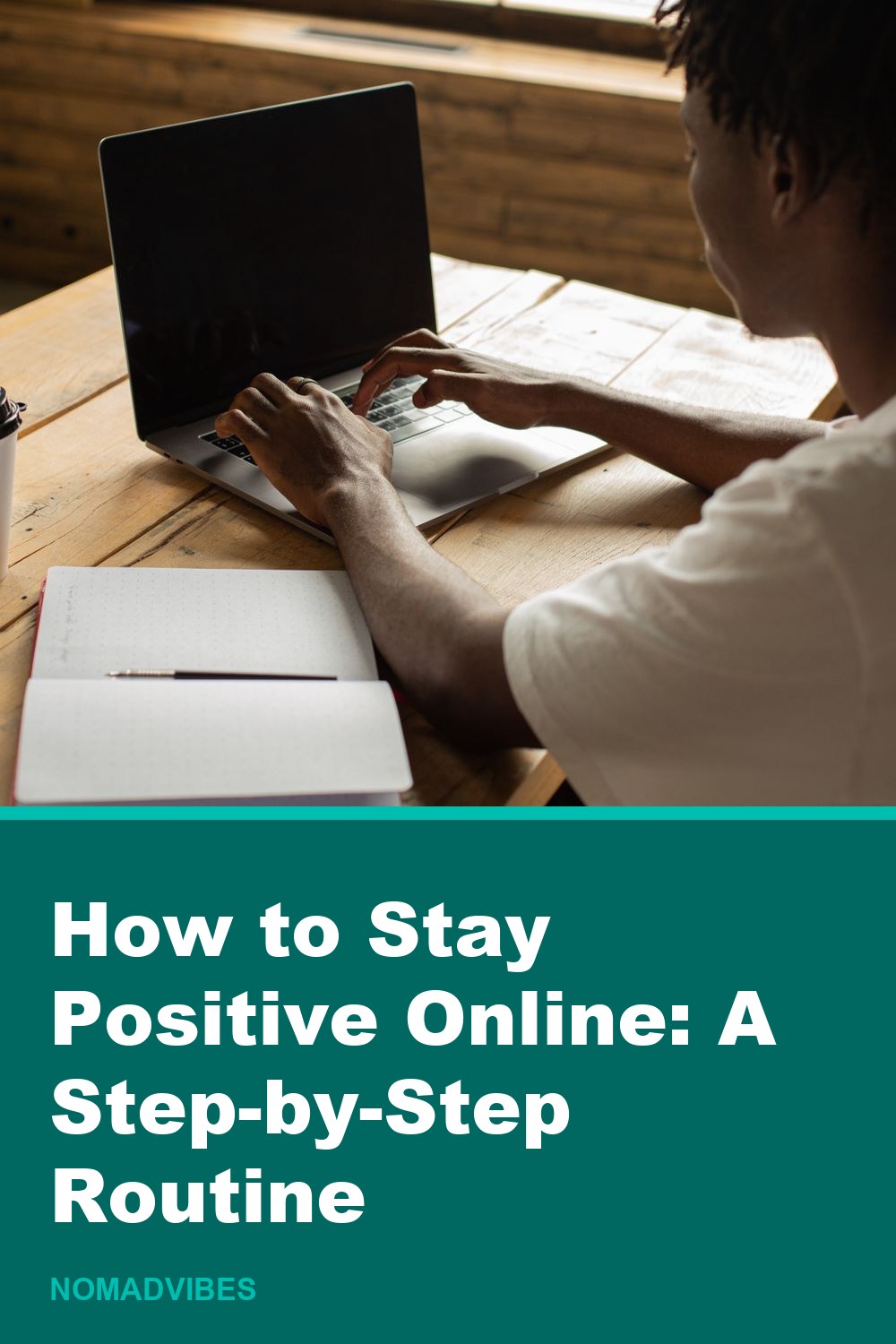

- Treat online negativity as a routine problem: set up your feeds, add daily rules, respond with a script, and review once a week.
- The internet shapes thoughts, behaviours and interactions, so changing your settings and habits is a practical way to change how you feel.
- Test any psychology tip against reliable sources before relying on it, and change one habit at a time so you can see what works.
You stay positive online by treating negativity as something you manage with a routine, not something you fight with willpower. Four steps cover it: set up your accounts so they show you less of what drags you down, follow a few daily rules, keep a short script for the moment something negative lands, and review the whole thing once a week. This matters for remote workers and long-stay travellers because the internet is both your office and your link to home. It shapes your thoughts, your behaviour and the way you deal with other people, so what you put in front of yourself has real daily effects.
Why a routine works better than trying to "think positive"
Internet psychology is the field that studies how online life affects the way we think, act and relate to one another. You do not need to study it to use the basic idea: if the internet influences you, then your settings, schedule and habits are tools you can change.
A routine also suits our way of life. Nomads change cities, time zones and Wi-Fi all the time. A fixed sequence of small actions travels with you, while a mood you are trying to force does not.
Check psychology advice before you rely on it
Online advice about positivity is easy to find and hard to judge. Before you build a habit on a tip, run it through a short filter:
- Look for the primary source. If a post says "research shows", find the research itself or an official health body that reports it.
- Separate the idea from the promise. A habit can be sensible without guaranteeing results. Treat any tip as a starting point.
- Match it to your life. Check it against your work schedule, your time zone and your comfort level.
- Change one thing at a time. If you change five habits at once, you will not know which one helped.
Everything below is a practical routine from a long-stay traveller, not clinical advice. If low mood or anxiety stays with you, talk to a qualified professional rather than adjusting your feed.
Phase 1: Set up your accounts in one sitting
Do this once, at the start of a week or on the first day in a new place. It is the same logic as the paperwork you do before a move: the effort goes in at the start, and the benefit shows up every day afterwards.
- Audit what you follow. Scroll your feeds and note which accounts, groups or channels leave you tense or envious. Mute or unfollow them. You are not judging anyone; you are choosing your inputs.
- Turn off non-essential notifications. Keep calls, client messages and anything tied to travel bookings or payments. Switch off the rest.
- Separate work and scrolling. Use different browser profiles or different devices where you can, so a work session does not drift into a feed.
- Add positive inputs on purpose. Follow communities where people help each other with practical problems, and subscribe to a few sources you trust.
- Write down your rules. Keep them in a note you can see. Rules in your head are easy to break.
If you want a printable aid, the Honest Toolkit has a digital detox checklist you can use to structure this first sitting.
Phase 2: Daily rules for the working day
Once the set-up is done, the daily layer should be light enough to follow on a bad Wi-Fi day.
- Start with something that is not a feed. Do your first task, or a short walk, before opening social apps.
- Set scrolling windows. Pick set times for social media instead of checking whenever you feel a gap.
- Keep news and comment sections out of work blocks. Read them in a window you chose, not in the middle of a task.
- End the day with a clear stop. Close the laptop and leave the apps shut for a set period.
Noise-cancelling earbuds help in a shared space or a noisy café, because they protect the work blocks you have set. For more on building consistent days on the road, see our post on how digital nomads can build focus and consistent routines while traveling.
Phase 3: A script for the moment something negative lands
Negativity will still get through: a harsh comment, a client's sharp email, a stressful post. The goal is not to feel nothing but to respond in a planned way.
- Pause before replying. Step away from the screen before you type anything.
- Name what happened in one sentence. For example: "Someone disagreed with my post and I feel stung." Naming it makes it smaller.
- Ask whether it needs action. If it does (a client issue, a safety warning, a booking problem), handle it calmly. If not, let it go.
- Mute, block or leave. You are allowed to remove a source that keeps hurting.
- Get it out of your head. Write the thought in a notebook or a notes app. A pocket notebook works when the connection is poor. The Honest Toolkit also offers a brain dump printable for this purpose.
- Change your surroundings. Go for a walk, make a drink, or talk to someone in the room.
Phase 4: A weekly review to keep the routine honest
Once a week, take a short sitting to look at what happened. Ask yourself:
- Which accounts or topics made me feel worse this week?
- Which windows or rules did I break, and why?
- Did any change clearly help? Keep it. Did anything make no difference? Drop it.
- What is the one thing I will change next week?
This is where the filter from earlier pays off. If a new tip catches your eye, check it against a reliable source first, then test it for a week before you add it to the routine.
Adjusting the routine when you move
Travel breaks routines, so plan for it. In your first days in a new place, repeat Phase 1 briefly: new time zone, new notification schedule, new places to work. Expect the first few days to be rougher while you settle. Keep backup plans for tough days, such as a place to work offline or a person to message who is not on social media.
If the lifestyle itself is what weighs on you, our posts on the realities and challenges of remote work and travel and on how nomads stay ahead in turbulent times may help you put it in context.
A one-page version to keep on your desk
- Phase 1, set-up: audit follows, cut notifications, split work from scrolling, add useful sources, write your rules.
- Phase 2, daily: non-feed start, scrolling windows, no news in work blocks, a firm stop.
- Phase 3, in the moment: pause, name it, decide if action is needed, mute or block, write it down, change your surroundings.
- Phase 4, weekly: review, keep what works, drop what does not, pick one change.
FAQ
Does staying positive online mean ignoring bad news?
No. It means choosing when and how you meet it. Read the news you need, such as travel advice or local rules, from official sources in a window you chose, and keep it out of your work blocks.
Should I quit social media completely?
Not necessarily. Try the routine first. Cutting inputs and setting windows often reduces the problem without removing the benefits of staying connected to friends and colleagues. If a platform still harms you after a fair test, leaving it is a reasonable choice.
As an Amazon Associate I earn from qualifying purchases: if you buy through these links I may earn a small commission, at no extra cost to you. Each link opens a search on the Amazon store for your country.
Photo: Monstera Production / Pexels

I'm an Italian creator who builds apps, games and websites. I run NomadVibes with the help of AI tools: every article starts from the sources linked above, and I check what goes out. I'm not a doctor, a lawyer or a financial adviser. Spotted a mistake or have an idea? Write to me.
Instagram @spartaco_94_My websiteWrite to meAbout this blog









 Pronunciation Perfection: How to Sound Like a Native Speaker
 Reinventing Yourself After 40: A Guide to Embracing Change and New Beginnings
 Personal Branding for Introverts: How to Shine Without Shouting





