 NomadVibes

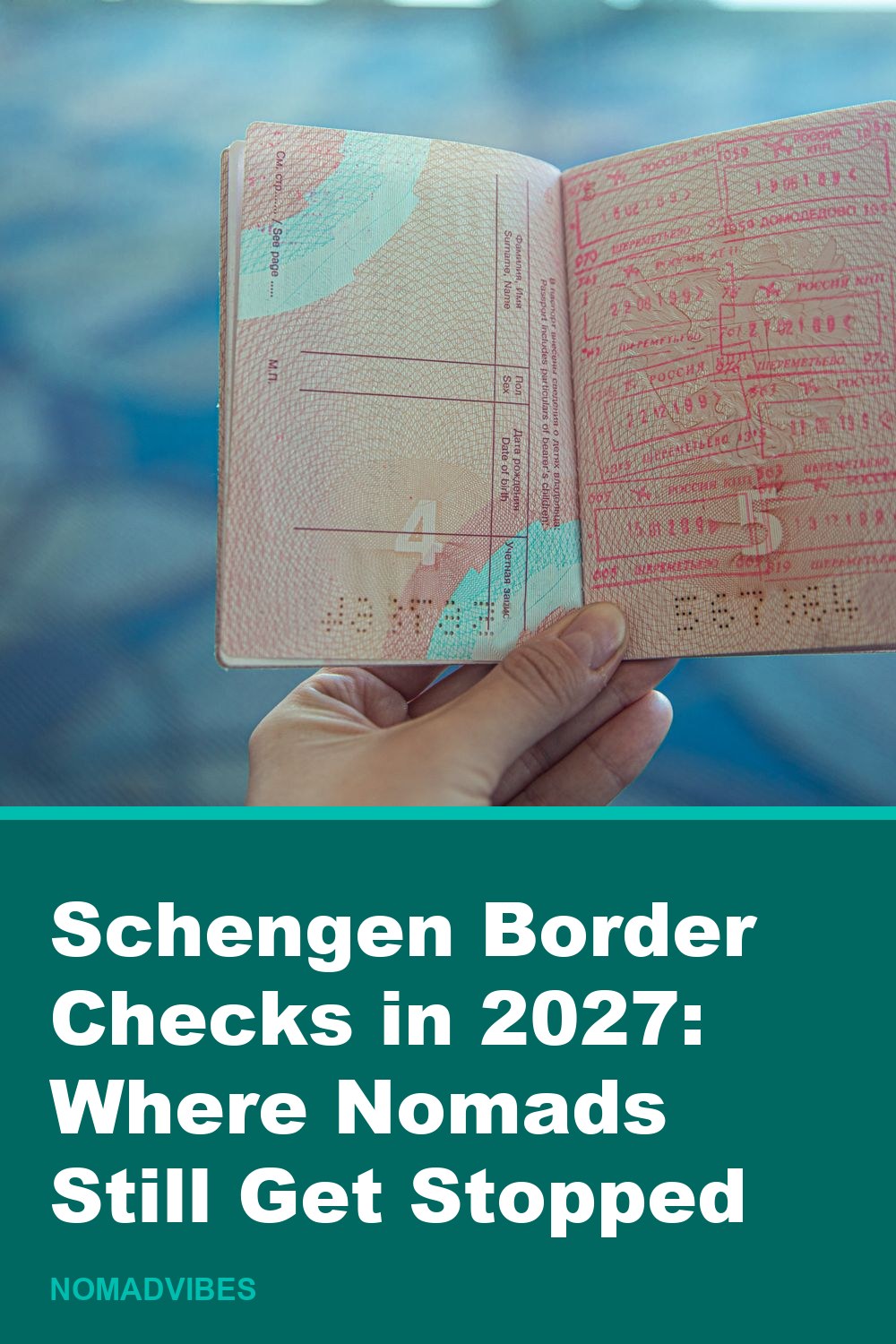

Schengen is meant to be the zone where you cross a border without showing a passport, but on 4 November 2026 eight countries are still checking travellers at some or all of their internal borders. According to SchengenVisaInfo, seven of them have already notified the European Commission that their controls will run into 2027. If you move between Schengen countries by train, bus or car, you should treat your passport and proof of your right to stay as standard kit, and leave some slack in your travel days.
Which countries are checking, and until when
The eight countries with temporary internal border controls in force on 4 November 2026 are Austria, Denmark, France, Germany, Italy, Norway, Poland and Sweden. Italy is the only one whose controls have not yet been extended into next year: its checks at the land border with Slovenia are due to end on 18 December 2026.
Denmark, Norway and Sweden have each notified a new six-month period from 12 November 2026 to 11 May 2027, with the same scope as now. Germany notified a further six months, to 15 March 2027, in August. France, Austria and Poland have also renewed since June.
Some of these checks are very old. SchengenVisaInfo notes that Germany, Austria and Sweden have checked travellers at some internal borders without a break since autumn 2015, and Denmark since January 2016.
Scope matters more than the headline
A country being on the list does not mean every crossing is checked. The table below uses the European Commission's list of notifications (dated 16 October 2026), as analysed by SchengenVisaInfo, and shows where each country has said it will check.
| Country | Where checks apply | Notified end date |
|---|---|---|
| Austria | Check the Commission list for the exact borders | Renewed into 2027 |
| Denmark | Land and sea border with Germany | 11 May 2027 |
| France | All internal borders, including flights from other Schengen countries | Renewed into 2027 |
| Germany | All nine land borders | 15 March 2027 |
| Italy | Land border with Slovenia only | 18 December 2026 |
| Norway | Ports with ferry connections to other Schengen countries | 11 May 2027 |
| Poland | Borders with Germany and Lithuania | Renewed into 2027 |
| Sweden | All internal borders, including flights from other Schengen countries | 11 May 2027 |
Norway is a good example of how narrow some controls are. Because its checks cover only ferry ports, a driver crossing from Sweden into Norway by road is not covered by the Norwegian controls. Germany, by contrast, has notified checks at every land border, so a route that passes through it carries more risk of a stop.
Why the checks keep being renewed
The reasons governments give have shifted since 2015. Denmark cites sabotage, terrorism and organised crime. Norway points to threats to its energy sector and sabotage. Sweden lists organised cross-border crime, Russia-related and hybrid threats, the use of migrants as a means of pressure, and the events in Ceuta.
The Commission has pushed in the other direction. On 2 June 2026 it issued opinions on the controls run by Austria, Denmark, France, Germany, Italy, the Netherlands, Norway, Slovenia and Sweden. It told Germany to work towards gradually lifting its controls and to rely on non-systematic police checks in border areas instead. It said something similar to Sweden. Magnus Brunner, the EU Commissioner for Internal Affairs and Migration, told AFP that the Entry/Exit System, fully running at external borders since April, and the new asylum and migration rules from June put member states in a position to phase controls out.
The opinions are not binding, and the renewals show governments are not rushing. Under the Schengen Borders Code, controls for a foreseeable threat can be notified for up to six months at a time and should not last more than two years in total. Several of the checks above have already run far longer than that.
What has changed this year
The list is slightly shorter than it was. The Netherlands let its checks lapse on 30 September 2026 and replaced them with targeted mobile checks by the Royal Netherlands Marechaussee in the border area. Germany's checks on its side of the Dutch border continue.
Italy and Spain ended the checks they had imposed on flights and ferries between each other after the Ceuta crisis. Slovenia ended its controls on 11 June 2026. Switzerland (for the G7 summit in Évian) and Norway (around the funeral of King Harald V) also ran short, event-based checks this year. Temporary controls can therefore appear at short notice, so check before you travel even if your route was clear last month.
What this means for you
For a long-stay nomad, the main risk is a delay or an awkward conversation, not a ban. Preparing for it is cheap.
- Carry your passport, not just a photo of it. Where controls are in force, officers can ask for a travel document. Keep it in your day bag, not in the luggage hold or boot.
- Carry proof of your right to stay. Depending on your situation, that could be a residence permit, a long-stay visa or a printout of your entry date and remaining days.
- Keep your own day count. SchengenVisaInfo has also reported that one in six people refused entry to the EU in 2025 had already used their 90 days. If you rely on visa-free time, know your exact number.
- Have the basics ready to show. Accommodation details and onward travel are the kind of documents that help a quick conversation stay quick. This is practical advice rather than a rule for any specific country.
- Add a buffer. Do not book a tight connection or a client call right after a land crossing into Germany, France, Austria, Poland, Denmark or Sweden.
- Check before you go. Look at the Commission's list or the SchengenVisaInfo Border Controls Checker for the borders on your route, particularly if you are driving through Germany or Poland.
Planning a route can also help. A road trip from Sweden into Norway avoids Norway's ferry-port checks, but the Swedish side is covered by Sweden's own controls. A Dutch-German trip no longer faces Dutch systematic checks, but German ones remain.
FAQ
Are there border checks inside the Schengen Area in 2026?
Yes. On 4 November 2026, Austria, Denmark, France, Germany, Italy, Norway, Poland and Sweden have temporary controls at some or all of their internal borders. Seven have notified controls that extend into 2027.
Do I need a passport to travel between Schengen countries by train or car?
Where a country has controls in force, you may be asked for a travel document, so carry your passport or the ID document that applies to you. If you are a non-EU traveller, also carry proof of your visa, permit or days remaining.
How long can Schengen countries keep internal border controls?
Under the Schengen Borders Code as reformed in 2024, controls for a foreseeable threat can be notified for up to six months at a time and should not exceed two years in total. In practice, several countries have renewed for years, and the Commission's opinions are not binding.
As an Amazon Associate I earn from qualifying purchases. Links open a search on the Amazon store for your country.
Sources
Photo: change.frame. media / Pexels

I'm an Italian creator who builds apps, games and websites. I run NomadVibes with the help of AI tools: every article starts from the sources linked above, and I check what goes out. I'm not a doctor, a lawyer or a financial adviser. Spotted a mistake or have an idea? Write to me.
Instagram @spartaco_94_My websiteWrite to meAbout this blog









 Pronunciation Perfection: How to Sound Like a Native Speaker
 Reinventing Yourself After 40: A Guide to Embracing Change and New Beginnings
 Personal Branding for Introverts: How to Shine Without Shouting





