 NomadVibes

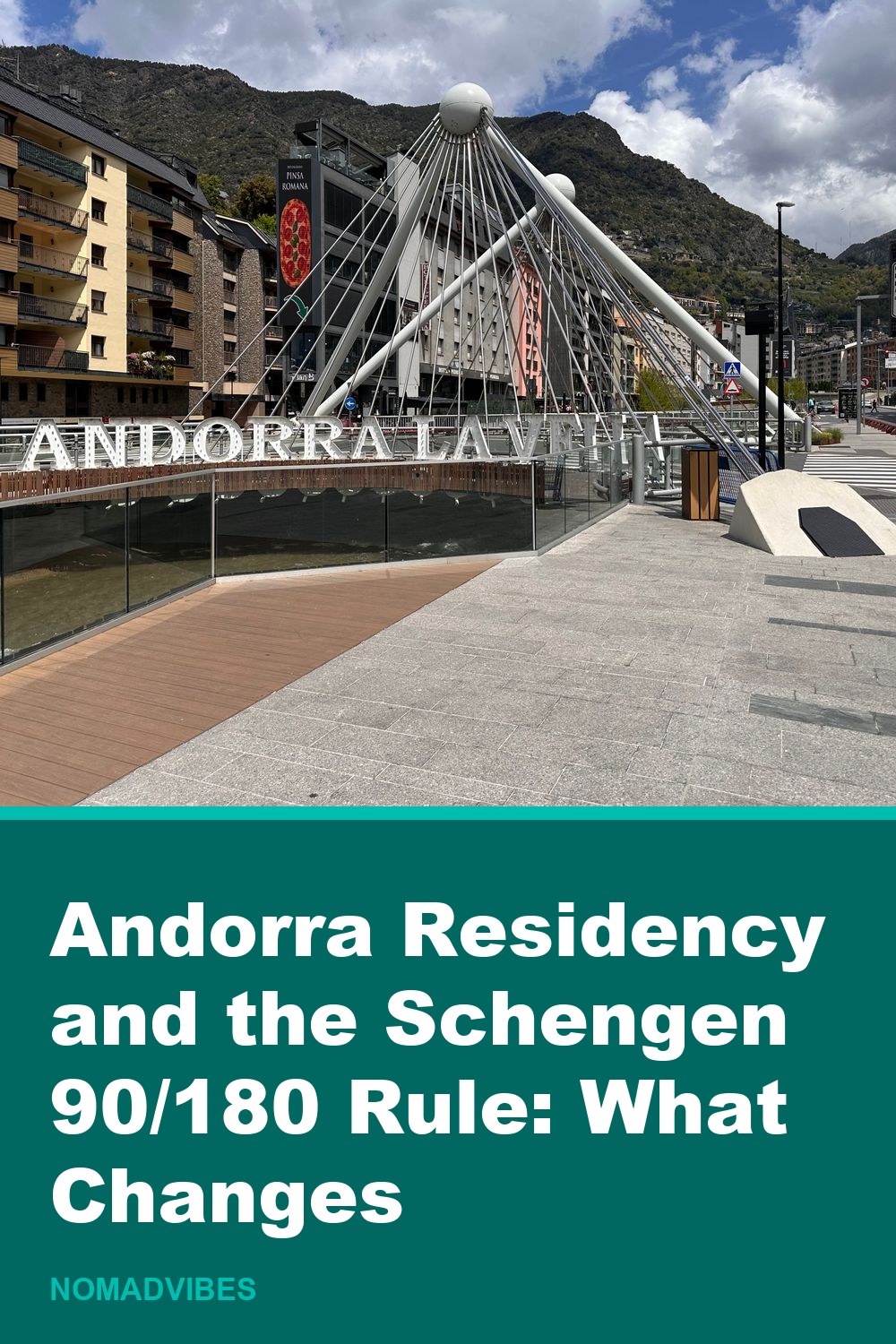

Andorra residency is about to come with a Schengen travel perk for non-EU nationals: up to 90 days in any 180 across the Schengen area, with no visa, no EES registration and no ETIAS. The catch for remote workers is that days spent in Andorra as a non-EU visitor will count towards that same 90-day limit. If you split your year between Andorra and Schengen countries, you will need to count both. The agreement is not in force yet, so this is a heads-up rather than a rule you can rely on today.
What the EU–Andorra agreement does
Andorra is outside the EU and Schengen, but it is surrounded by two Schengen countries, France and Spain. According to SchengenVisaInfo News, its land borders have never had systematic checks, and it has no airport with scheduled commercial flights. That worked until the EU's Entry/Exit System became fully operational at all external borders on 10 April 2026 and began recording short-stay non-EU travellers with biometrics.
The European Commission warned that without a deal, non-EU residents of Andorra could be wrongly flagged as overstayers, because their exit from Schengen would never be registered. That could cause trouble with later visa, ETIAS and residency applications. The new border-management agreement is the fix. Travel between Andorra and Schengen countries would continue without border checks. In return, Andorra agrees to have its non-EU residents vetted by its neighbours.
Today, according to SchengenVisaInfo News, non-EU residents of Andorra move freely only in Andorra, Spain and France. Other Schengen countries apply their own entry rules. Once the agreement applies, a legal resident with a valid travel document and residence permit could visit any Schengen country for up to 90 days in any 180.
The part that affects visitors: Andorra days count
The agreement says that for non-EU tourists, days in Andorra will count towards the Schengen 90/180 limit. Andorra will therefore not work as a free "reset" zone for people who are not residents. If you are a remote worker passing through on a short stay, a month in the Pyrenees uses up part of the same allowance you need for Lisbon, Berlin or Athens.
SchengenVisaInfo News also says residents' Schengen visits count towards their own limits. In practice, anyone who spends time in both places needs one running tally, not two separate ones.
Who the deal is for, and who it is not for
Residency has to be real. Andorra must make sure non-EU nationals only gain and keep residency where there is a genuine link to the country. The requirement is "actual and regular physical presence". Investment alone will not qualify, which matters because passive residency through investment is one of the better-known routes into the country.
Schengen-wide travel is also strictly for short visits. Each Schengen country may require a visa or work permit if you want to take up paid employment there. Andorran residency does not give you the right to live in any other European country. If your plan is to base yourself in Spain or Portugal for months, Andorra residency does not replace the immigration status you would need there.
Security checks and the new residence card
Before issuing or renewing a permit for a non-EU national, Andorra must notify France or Spain, which split cases using an agreed distribution key. The chosen country checks national, international and EU databases, including the Schengen Information System and EU sanctions lists.
- France or Spain has 28 calendar days to object, extendable once by 14 days. Silence means no objection.
- If another Schengen country has already issued an alert, it has 10 days to reply.
- If France or Spain objects on security grounds, Andorra must refuse or revoke the permit. According to Secretary of State for EU Relations Landry Riba, Andorra would then need to make the person leave.
- If the alert is not a security risk, Andorra can still issue the permit, but it will not be valid for Schengen travel except transit.
Andorra will be told which country issued an alert, but not why. Applicants will be able to appeal. A conditional permit, still being designed, will let people start working or studying while their case is processed. It will not allow Schengen travel apart from tourist stays or other specific cases. Justice and Interior Minister Ester Molné said she does not expect many negative responses, though the government has no statistical estimate and no direct access to Schengen databases.
Cards will change too. Andorra must move to the standard EU residence-permit format within one year of the agreement taking effect. Existing cards stay valid for up to two calendar years or until they expire, but the Andorran government's FAQs say all cards must be replaced within the first two years of application. New cards are issued only after the security check is passed.
Key points at a glance
| Topic | What the agreement says |
|---|---|
| Status | Not yet in force; needs signing, with provisional application hoped for |
| Residents' Schengen access | 90 days in any 180, visa-free, no EES or ETIAS |
| Access today | Free movement only in Andorra, Spain and France |
| Non-EU tourists in Andorra | Days count towards the 90/180 limit |
| Paid work elsewhere in Schengen | Each country may require a visa or work permit |
| Residency basis | Actual and regular physical presence; investment alone not enough |
| Security check | France or Spain: 28 days, plus 14 if extended |
| Card replacement | All cards changed within two years of application |
What this means for you
The right move depends on which of these describes you.
- You plan to visit Andorra as a tourist or short-stay remote worker. Treat Andorra days exactly like Schengen days. Add them to your log, and do not plan a long Andorra stay as a break between two Schengen stints.
- You are considering Andorran residency. Plan to actually live there. A paper-only arrangement is exactly what the physical-presence requirement is meant to stop. Allow time for the French or Spanish security check, which can run to 42 days if extended.
- You already hold a residence card. Expect to swap it for the EU-format card within the first two years of the agreement applying. Keep your documents current so the renewal check does not catch you out.
- You want to work from another Schengen country. Check that country's rules on paid work before you go. Andorran residency does not settle that question.
A simple habit helps in every case: keep a dated spreadsheet of entries and exits for Andorra, France, Spain and everywhere else in Schengen, and check the rolling 180-day window before booking. As an illustration, if you spent 40 days in Andorra as a visitor within the last 180 days, you would have 50 days left for the rest of Schengen, not 90.
Finally, watch for the signing and the start date. Until the agreement applies, residents' access beyond Spain and France depends on each country's own rules.
FAQ
Do days in Andorra count towards the Schengen 90/180 limit?
For non-EU tourists, yes. According to SchengenVisaInfo News, days spent in Andorra will count towards the 90-day limit once the agreement applies.
Can I work remotely anywhere in Schengen with an Andorra residence permit?
Not as a general right. The permit allows short visits of up to 90 days in any 180. Individual countries may require a visa or work permit for paid employment, and Andorran residency does not give you the right to live elsewhere in Europe.
Is the Andorra deal in force yet?
No. It still needs to be signed, and the Andorran government hopes to apply it provisionally. Until then, non-EU residents have free movement only in Andorra, Spain and France.
Watch or listen to this episode
Sources
Photo: James Smith / Pexels

I'm an Italian creator who builds apps, games and websites. I run NomadVibes with the help of AI tools: every article starts from the sources linked above, and I check what goes out. I'm not a doctor, a lawyer or a financial adviser. Spotted a mistake or have an idea? Write to me.
Instagram @spartaco_94_My websiteWrite to meAbout this blog









 Pronunciation Perfection: How to Sound Like a Native Speaker
 Reinventing Yourself After 40: A Guide to Embracing Change and New Beginnings
 Personal Branding for Introverts: How to Shine Without Shouting





